




Crested caracara, raptor or vulture?
Crested caracara: raptor or vulture? A member of the falcon family, this Highland Lakes native acts a little like both. Adobe image
This striking Highland Lakes native looks like a hawk, acts like a vulture, and belongs to the falcon family. A medium-sized raptor, the Northern Crested Caracara is a year-round resident of the area—unlike the American Bald Eagles that only winter here.
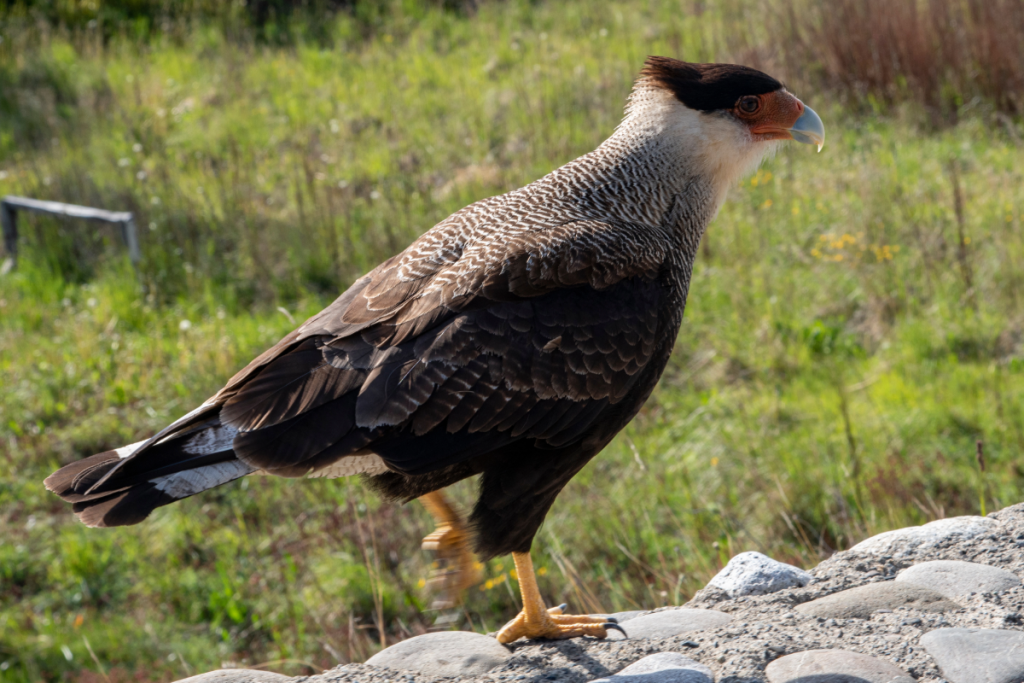
They are eye-catching birds with long yellow legs, large, sharp, flattened talons, and a flat white head topped by a thick black crest.
Its face is bright orange-red and featherless with a heavy, blue-gray beak peeking out. The bird is covered in black feathers, except for a white head/neck, wing tips, and the underside of the tail. When the bird is focused or stressed, the black crest stands tall, resembling a thick, messy mohawk, while the skin on the face often pales.
Crested caracaras are not considered to be ‘true falcons’ for a few reasons: hunting style, legs and talons, and lack of a special beak notch. Also, the wings are more suited for soaring than for a speedy attack. The long-legged looker spends about as much time on the ground as in the air.
With their four-foot wingspan, they can reach about 40 mph in the air. They hunt in open pastures, prairies, and scrub, and perch in places with good views to keep an eye out for prey.
At mealtime, the crested caracara’s vulture-like tendencies come out. Caracaras are opportunistic feeders, eating anything available, including roadkill. Flying faster than vultures, crested caracaras can be on the scene before other scavengers; however, if they are late to the dinner party, they will become the obnoxious guest and run the others off.
In addition to snagging an already deceased meal, the long-legged bird hunts by stalking and running down prey on the ground. Meals often include small mammals, fish, eggs, insects, and reptiles. The bird’s yellow crop may be seen protruding through chest feathers, indicating a full belly.
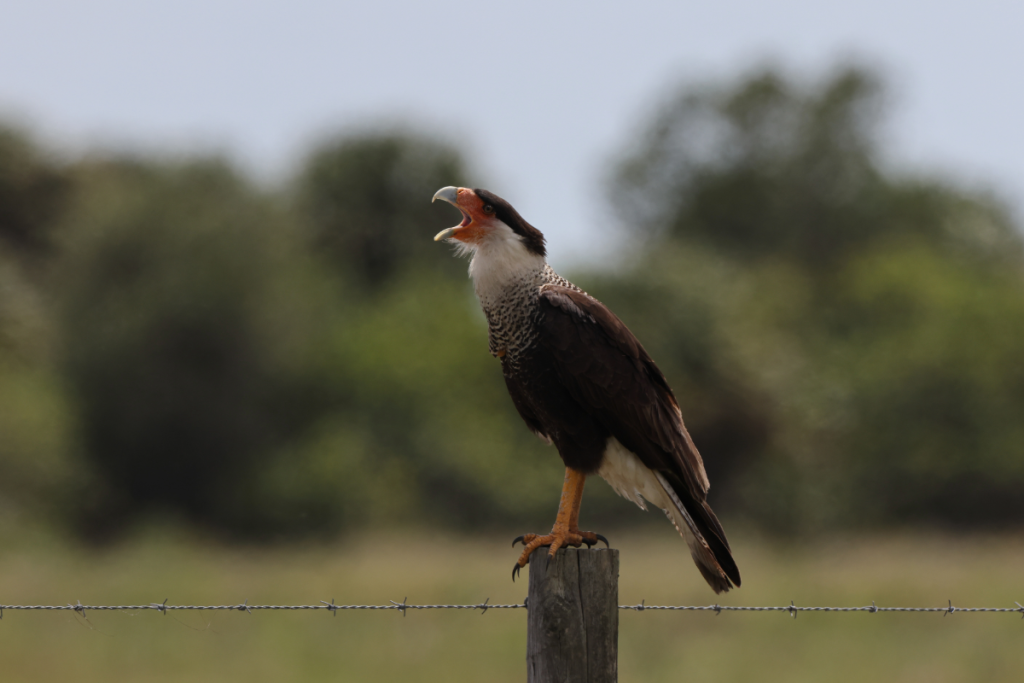
Crested caracaras are more walk than talk. When they do “speak” the call sounds very much like a stick being run along a fence. At times, when calling, the bird will toss its head all the way back, followed by a quick upward bill thrust. The birds become much more vocal during breeding season, which is from January to June in the Highland Lakes.
Crested caracaras are the only members of the falcon family that gather materials to build a nest. Mated pairs tackle this feat together and are known to return to the same nest with the same partner year after year.
The nest made of twigs is large and cup-shaped. Once the eggs are deposited, both parents take turns warming them until they hatch.
A clutch consists of one to four eggs, which incubate for about 30 days. Hatchlings are covered in light fuzz, have a dark cap, and are fed by both parents for about six to eight weeks. Once the young begin to fly, they stay with the parents for a few more weeks to learn life skills. Juveniles resemble adults but are more subtly colored in brown and beige.
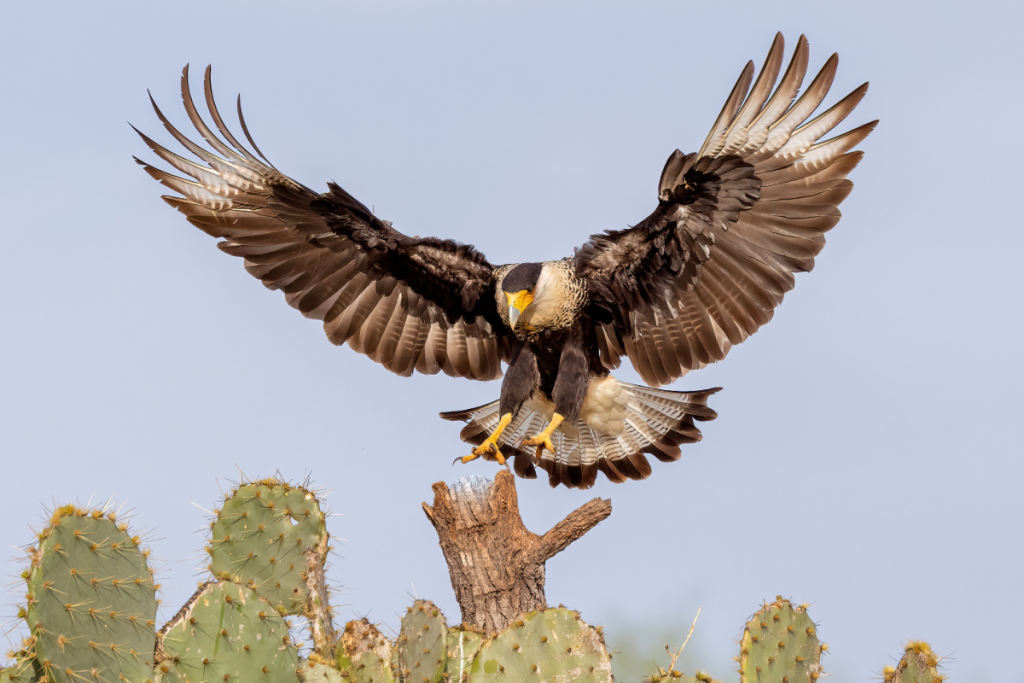
Crested caracaras are often referred to as Mexican eagles. Some believe the bird depicted in the Aztec emblem on the Mexican flag was based on a caracara. The current emblem on the flag is a golden eagle.
Fun facts on the fly
• Crested caracaras often fly low, along roads in search of roadkill.
• Their talons are more flattened than those of other birds of prey due to heavy ground travel.
• They are the only member of the falcon family that collects materials for nest building.
• They originated in more tropical areas but are now common in the southern U.S.