




Texas Lantana, blooms in the face of adversity
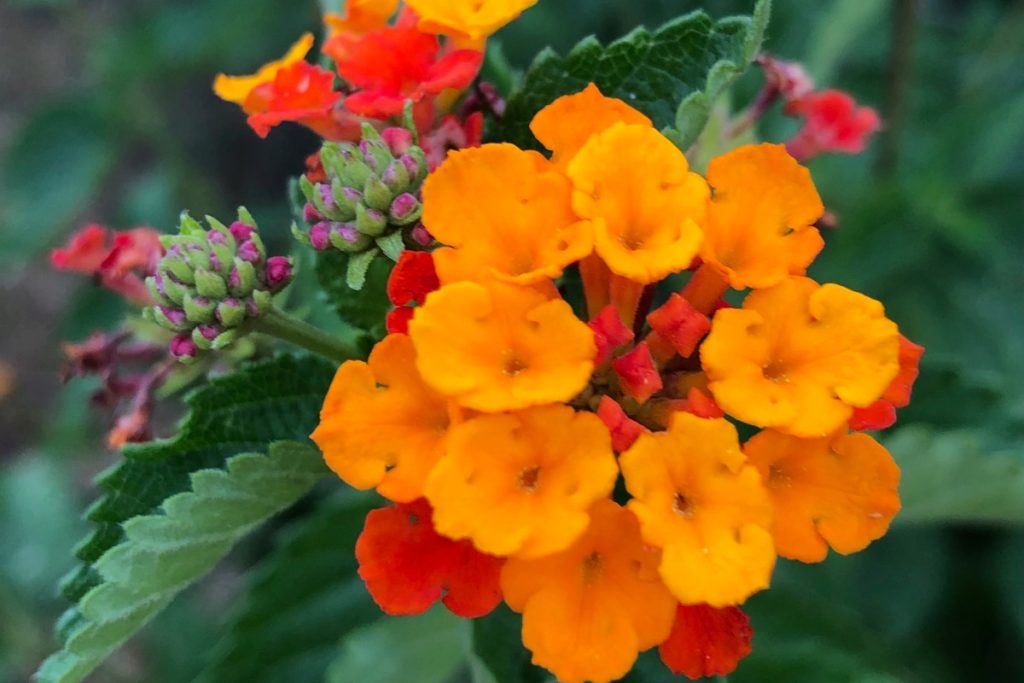
Texas lantana could be considered a superhero among plants as it is nearly indestructible. Triple-digit heat makes it bloom profusely, providing food for bees and butterflies. Staff photo by Jennifer Greenwell
Triple-digit Texas heat is no match for Texas lantana. An easygoing native, Lantana urticoides blooms in the face of adversity. It takes very little to make it happy; in fact, it thrives in poor soil, under blazing-hot sun, and with little water.
Having tropical roots, Texas lantana is a heat-activated shrub—the hotter it gets, the better it blooms. Pollinators are highly attracted to its sun-yellow clusters of flowers, which change color with age, creating a fiery bouquet of yellow, orange, and red.
Texas lantana can grow up to 6 feet tall. Butterflies and bees consume its nectar and aid pollination. Once fertilized, it fruits with green, seed-bearing berries that turn dark purple-black when mature. The berries are consumed by birds, and the seeds get, er, distributed.
Deer with the midnight munchies know better than to sample its ample blooms, leaves, and branches. This hardy Texan is naturally deer-resistant. All parts of lantana are toxic to man and beast but not to avian friends. Some insects are also immune.
Its leaves are rough and scratchy and can irritate skin, hence the name “urticoides,” which means “like a nettle.”
All superheroes have a nemesis. The lantana lace bug is just that for lantana. The tiny pest is native to Texas but was introduced years ago in many countries as a biological control for certain highly invasive lantana varieties. Bio-weaponry didn’t quite work out, but the insect continues to terrorize lantana plants wherever they grow.
While Texas lantana is a beneficial plant in gardens, watch out for another common variety: L. camara, commonly called large leaf lantana, or simply lantana. Despite its perky pink, lavender, white, and yellow flower clusters, it is considered one of the most invasive plants. Should you have it in your garden, beware: It tends to take over. Large leaf lantana grows in dense clumps and emits chemicals from its roots and stems that suppress the growth of nearby plants. And birds can distribute its seeds far beyond your yard’s borders.
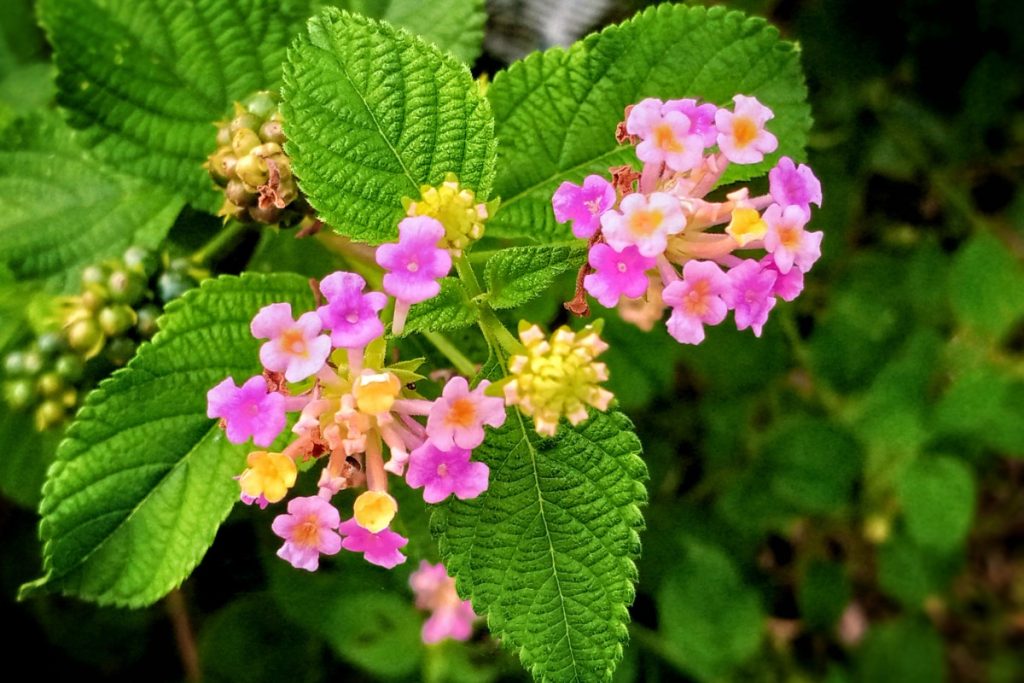
Consider replacing the invasive plant with native Texas lantana or one of the fruitless (sterile) varieties of lantana sold in nurseries. When shopping for native lantana, look for the yellow-orange-red bloom clusters.
FLOWER FACTS
• A single lantana plant produces up to 12,000 berries.
• Crushed leaves release a distinct and strong (not necessarily pleasant) odor.
• Deer don’t like the odor or texture of lantana leaves.
• Its 150 species range from upright, 6-foot shrubs to low, trailing ground cover.
• It can be grown in gardens or containers, including hanging baskets.
• Spanish colonists used lantana to cure snakebites and stomach aches.