




State reps question controversial transmission line project
Stock image
A controversial transmission line project is under scrutiny from state lawmakers who are questioning the line’s ability to effectively satisfy the growing electricity demands of West Texas and its potential negative impacts on property owners and power users across the state. The representatives hope to put a pause on the power plan until it can be examined further.
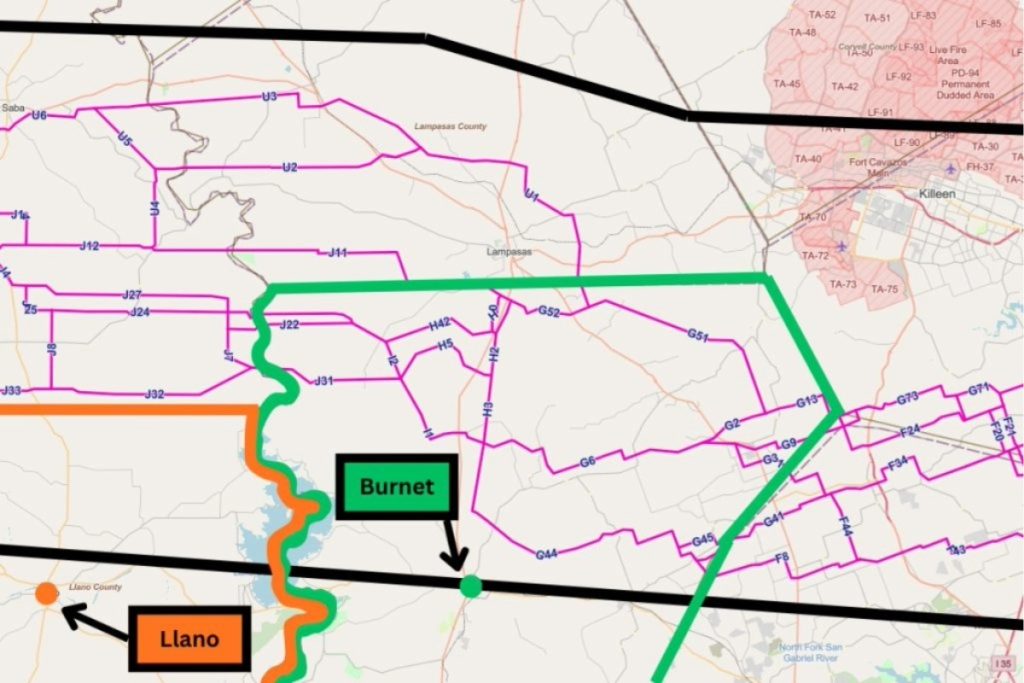
A letter from five Texas elected officials was sent to the Public Utility Commission of Texas on Tuesday, May 5, requesting a meeting with the agency to discuss the Bell County East to Big Hill 765kV project, a $33 billion initiative that would include sending over 200 miles worth of easements, eminent domain purchases, transmission lines, and 18-story steel towers across the Texas Hill Country, with all possible routes cutting through Burnet County.
“Texans deserve a more thoughtful and deliberate approach to improving existing infrastructure, one that enhances reliability and resilience, reduces costs, and better protects private property rights,” reads the May 5 letter.
The project is in the midst of standard PUCT procedure, with the state agency assessing formal protests and interventions from interested parties before it makes a final decision on how to proceed sometime in September.
The letter bears the signatures of House District 19 Rep. Ellen Troxclair and Senate District 24 Sen. Pete Flores, who each represent Burnet County. The other signers are HD 54 Rep. Brad Buckley and HD 55 Rep. Hillary Hickland, who represent different portions of Bell County, and HD 72 Rep. Drew Darby who represents several West Texas counties.
Read the full letter at this link.
The Bell County to Big Hill project is backed by an order from the 88th Texas Legislature in 2023, which passed House Bill 5066.
That bill, among other things, mandated that the state develop a power reliability plan for the Permian Basin region of West Texas that would “extend transmission services to areas where mineral resources have been found,” “address increasing available capacity to meet forecasted load,” and “provide available infrastructure to reduce interconnection times in areas without access to transmission service.”
The letter from the state representatives supports bringing power to West Texas, but questions whether the Bell County to Big Hill project actually satisfies the requirements of HB 5066.
“It is our understanding that the Permian Basin Reliability Plan can be successfully executed without the immediate construction of all proposed import paths (transmission lines),” reads the letter. “In fact, if the strategy were to prioritize dispatchable energy generation within the Permian Basin, closer to the fuel source, it could provide greater long-term grid reliability for Texas rather than relying primarily on large-scale import path transmission projects.”
The legislators are referring to the purpose of the Permian Basin Reliability Plan, which is to figure out a way to make the Texas electric grid more resilient and reliable. They argue that generating more power in West Texas could be a better strategy than carrying power through transmission lines from across the state. The Permian Basin region is one of the largest petroleum producing areas in the United States.
Troxclair
HD 19 Rep. Troxclair spoke with DailyTrib about her concerns regarding the Bell County to Big Hill project, following up on her Jan. 16 statement in which she announced her public opposition to the transmission line plans.
“I think we can all generally agree that we need to electrify the Permian,” she said. “However, the current transmission plan does not treat capacity. We would be moving electricity from one place to another, just shuffling it across the state at an extreme cost to task payers.
Troxclair emphasized that she supported bringing more reliable electricity to West Texas to support the petroleum industry, but made it clear that she disagreed with the presented method.
“Hands down, Texas is better off building generation than transferring electricity across the state,” she said. “A reading of the bill makes it clear that all options were to be considered and I don’t think that this has happened. Our ask to the (PUCT) is that all options are considered before moving forward.”
Background on the Bell County East to Big Hill 765 kV Transmission Line
The Bell County East to Big Hill 765-kV Transmission Project has been on Burnet County’s radar since June 2025. Since then, public opposition and protest has risen and the county has officially taken up opposition to the state project.
The transmission line project’s intention is to bring power to West Texas, but many Burnet County residents believe that it would be at the expense of Hill Country landowners.
The project was mandated by the Texas Legislature in 2023 through House Bill 5066. The bill aimed to increase the reliability of the Texas electric grid, and also specifically targeted bringing power to the Permian Basin region of West Texas.
The Public Utility Commission of Texas took on the task, requesting the Electric Reliability Council of Texas to conduct a study on the power needs of the Permian Basin, resulting in the Permian Basin Reliability Study.
The results of that study showed a massive increase in the projected demand for electricity from that region, mostly to satisfy an estimated addition of 11,695 megawatts to the grid from the non-oil and gas industry. Per ERCOT’s study, this load would be made up of 59 percent cryptocurrency operations, 22 percent “green hydrogen” projects, 13 percent “other” commercial and industrial projects, and 6 percent datacenters. Power would also be used to electrify the petroleum industry in West Texas.
Once ERCOT’s study was completed, the PUCT tasked Oncor Electric Delivery and the Lower Colorado River Authority with devising a plan to deliver more power to the Permian Basin. After months of planning the organizations created a preliminary plan and route for 765 kilovolt powerlines to be run from Central Texas to West Texas. Burnet County was notified of the plans, and the fact that it would likely be included in all possible routes, in May 2025.
The project, to be paid for by the state, has an estimated total cost of $33 billion, and would include three major lines, including the Bell County East to Big Hill project.
Read the DailyTrib stories below to learn more:
- ”Massive transmission line would cut through Burnet County,” June 6, 2025
- ”Burnet County considers careful next steps in response to transmission line,” June 25, 2025
- “Burnet County seeks legal counsel for transmission line project,” July 10, 2025
- “Burnet County OKs funds for transmission line legal help,” July 22, 2025
- “Power line project protesters: Why here?,” Oct. 13, 2025
- “Questions raised, but few answered, at transmission line town hall,” Oct. 24, 2025
- “Burnet County takes official stance against transmission line,” Oct. 29, 2025
- “Oncor and LCRA update transmission line timeline,” Nov. 4, 2025
- “Llano County joins transmission line opposition,” Nov. 11, 2025
- “Transmission line opposition creates protest schedule and theme song ‘Two Hundred Miles of Greed’,” Nov. 24, 2025
- “Troxclair takes public stance against transmission line project,” Jan. 20, 2026
- “Burnet County considers intergovernmental commission to combat transmission line; community workshop Feb. 3,” Jan. 29, 2026
- “Burnet County group hosting anti-transmission line meeting series: ‘The time to advocate for our area is now,” Feb. 20, 2026
- “Burnet County and city of Burnet join forces to battle state transmission line project,” Feb. 25, 2026
- “Transmission line plans expected soon; Llano County now in possible impact zone,” March 10, 2026
- “The countdown starts: 30 days to file intervention/protest in state transmission line project,” March 27, 2026
1 thought on “State reps question controversial transmission line project”
Comments are closed.
Crypto mining and data centers: they want to tear up our country side to make wealthy people wealthier.