




At 105, former PI recalls time at the FBI, return to hometown Spicewood
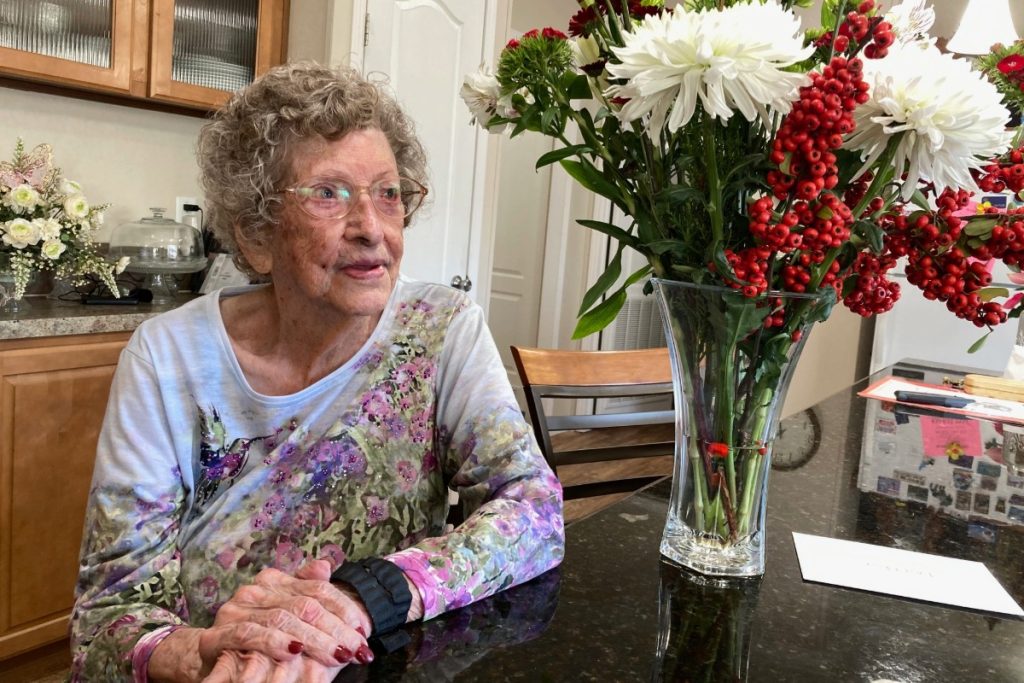
Dortha Bittle with a bouquet of flowers given to her for her 105th birthday on Dec. 19, 2025. Bittle is a Spicewood native, a supporter of the Spicewood Community Library, and a former FBI employee and private investigator. Courtesy photo by Preston Kirk
Dortha Phillips Bittle of Spicewood cherishes her memories of working for the FBI and as a private investigator as well as being a wife and a mother, just part of what she has accomplished in more than a century of living.
Bittle recently celebrated her 105th birthday at a special event in her hometown of Spicewood, where she was born on Dec 19, 1920. She retired on the original Phillips family property in the Burnet County community more than 20 years ago but has lived all over the United States.
“I came back to Spicewood because that’s where I was born,” she told The Picayune Magazine. “My mom was still alive when I came back. I used to say, ‘I’ll always be at home at Christmastime.’ Other people have to fly there to be home. I don’t anymore.”
Her family raised watermelons and peanuts on land that was later sold to the Lower Colorado River Authority for flood easements when dams turned the river into a chain of lakes.
Young Dortha Phillips attended primary schools in Spicewood, Fall Creek, Haynie Flats, and Post Oak Bend. She graduated from Bertram High School then moved to Austin to attend Nixon-Clay Commercial College.
After graduation, she worked for an insurance company and became a member of the Church of Christ on Avenue B in Austin. That’s where the FBI recruited her for what was then a high-paying job in Washington, D.C.
“An FBI agent came to the church and said he needed some special Christian kids, just good kids, to work for them,” she said in a 2019 interview on StoryCorps, a nonprofit that archives recorded conversations in the Library of Congress and airs them on NPR radio stations across the nation. “I had to go to the courthouse and take a civil service exam to get in.”
Then-FBI Director J. Edgar Hoover notified her by telegram that she got the job, telling her to report to D.C. as “clerk GAF 2 at the rate of fourteen hundred and forty dollars per annum less five percent deduction for retirement purposes.”
“I had to go to Washington at my own expense,” Bittle said. “It would be a month before I could get any money. I wired back that I would come, even though I didn’t have any money.”
She had never borrowed money, did not have a car, and had never been on a train, which was how she would have to travel the 1,500 miles to the nation’s capital.
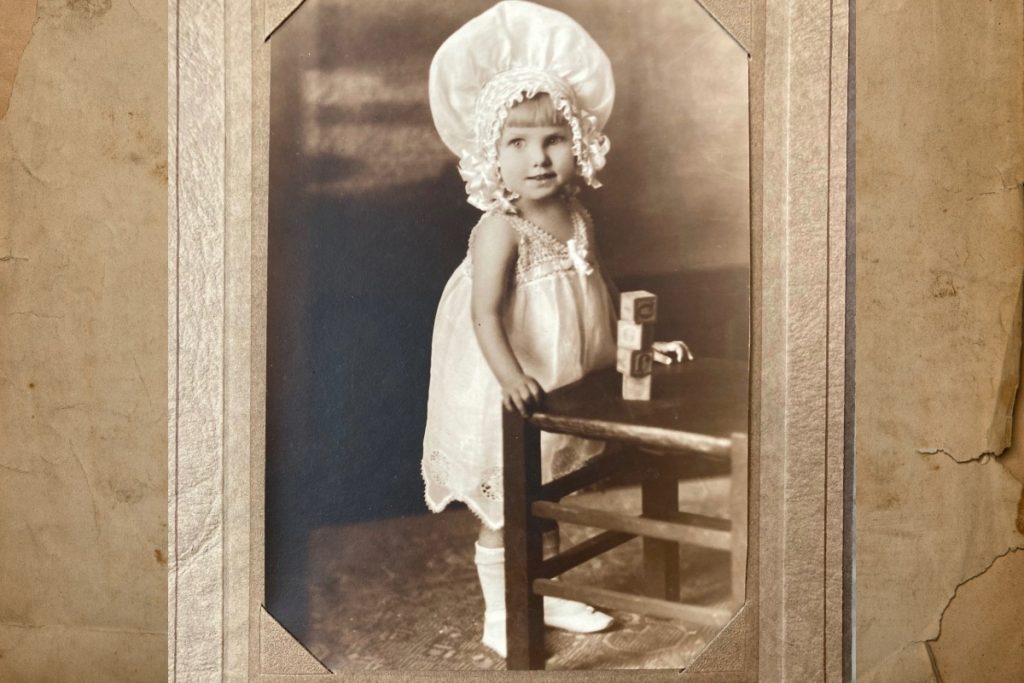
While $1,440 a year doesn’t sound like much now, it was a lot compared to what people in Central Texas were making at the time.
“People were making $1 a day, or $30 a month,” Bittle said. “That’s $300 a year. What I was making was pretty high pay. My first job in Bertram, when I was still in school, paid $1.50 a week!”
Her father went to the bank and borrowed money so she could take the Sunshine Special on the Missouri Pacific Railroad connecting Texas to the East Coast. She arrived on Armistice Day, Nov. 11, 1940, when the city was teeming with military.
“When I got to D.C., it was the coldest day I’d ever experienced,” Bittle said in the StoryCorps interview.
The first thing she purchased was a winter coat.
“It was hard to find a place to live, but I met a lady on the train who had taken the same test I had, and she was kind enough to invite me to live with her in a home she was renting,” Bittle said. “My first duty with the FBI was a night shift. I worked 11 p.m. to 4 in the morning. That was real hard. I’d go to sleep on the keyboard.”
Working and living in D.C. opened up the world for Bittle. She visited all of the Smithsonian museums and traveled to New York City to see the Easter parade and the Radio City Rockettes.
“We went up to the top of the Empire State Building in New York,” she said. “We got to the 102nd floor in about 60-something seconds. When you got to the top, you could ‘call home from the top of the world.’ I didn’t have any money to call, but I got to do so many things.”
She met her husband, Vernon “Bit” Bittle, in Washington. He enlisted in the U.S. Army and was shipped to the Pacific, where he served under Gen. Douglas MacArthur. Dortha and Bit married when he returned 18 months later. He was then stationed at Camp Maxey near Paris, Texas, and the Oklahoma border, where he trained infantry.
“We had to get an apartment in Oklahoma,” she said. “There was no place to live any closer to the base.”
He was shipped out again as World War II heated up, which is when Dortha went to work as a private investigator for WilMark. She worked undercover in banks and retail stores to root out employee theft. The company transferred her to California when her brother, Shelton Darwin Phillips, joined the Navy and was stationed there. Her husband was still overseas.
“I worked all over the Northwest,” Bittle said. “I left on an assignment from Los Angeles that lasted three months and took me way up the coast to Washington, Oregon, Idaho, and Montana.”
After Bit returned from the war in 1945, the couple settled in Denver and started a family. When the youngest of two sons was about 6 weeks old, the family moved to Austin, where they remained until Dortha retired. Bit died of cancer in 1976.
She moved next door to her brother, who also retired in Spicewood on the family land. He died in 2018.
Bittle had other jobs throughout her long life. She taught school but, most importantly, remained involved in her community. She has served as parade marshal at several Spicewood Fourth of July celebrations, riding and waving from the lead car.
She was at the Spicewood Community Library groundbreaking on Jan. 8 and is a founding member of the 19-year-old facility, which first opened with private funding in 2007. The library became part of the Burnet County system in 2021.
Bittle continues to offer her support to the Spicewood library and the community, following a philosophy she learned from her mother as a young girl.
“My momma would say, ‘The thought of doing anything is a lot worse than doing the work,’” she said. “Anytime I didn’t want to wash the dishes, I’d hear her say that, and I’d get up and do it. Then I didn’t have to worry about it. That’s what I do. I get on up and do it.”
When asked to recall the best time in her life, Bittle answered immediately.
“I’m having about as good a time as any I ever had right now,” she said. “I thank God for every new day.”