


Roots of Marble Falls Black history
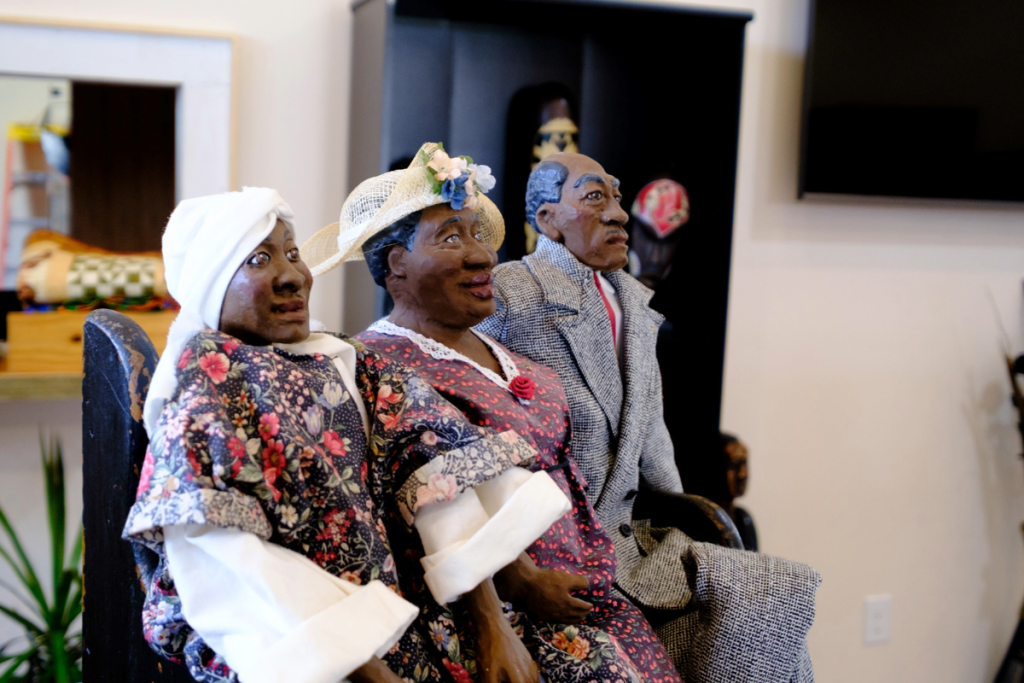
Staff photo by David Bean
African-American museum celebrates heritage from Africa to Central Texas
Dicey Yett and Green Johnson jumped a broom to seal their marriage five years after being freed as slaves. They lived in a small house behind the Roper Hotel on U.S. 281, where they worked, raised nine children, and founded a church and school. What is now St. Frederick Baptist Church, and what was the Colored Normal George Washington Carver Elementary School until desegregation in 1964, began in the Johnsons’ living room in the 19th century.

Although the school is gone, the church remains and is celebrating Black History Month and the grand opening of its African-American History Museum on the last two weekends in February.
The church has been a bastion of the Black community in Marble Falls since its founding in 1893, when its congregation of former enslaved people sang its first hymns of praise and freedom from a home on East Third Street.
Dicey was a young girl when she and her family were brought to Spicewood from Tennessee as the property of Dr. Pleasant M. and Pamela Cureton Yett. She was the wet nurse for three of the white couple’s children, according to a handwritten account from Earl Moore, one of her grandsons. Moore served as a guide for Gen. Adam R. Johnson, the founder of Marble Falls. Johnson was blinded fighting for the Confederacy in the American Civil War (1861-65).
“Yes, Dicy, who was then called Dic, raised those three doctors, and they were by name Dick, Tom, Reed Yett,” Moore wrote. (The spelling of Dicey’s name in this quote is exactly as Moore wrote it but differs from other records and the spelling used for this article.)
Dicey’s father, Joseph, adopted the Yett name, which she used until her marriage to Green Johnson on Oct. 5, 1870. The couple was married in a traditional African-based ceremony that symbolized sweeping away the past to make way for a new beginning.
“They (the white Yetts) stepped her over the broomstick and told her she was married to one other slave they had then, and she raised an awful large family,” Moore continued. “She and the family served the Yetts until they were freed.”
When they were actually freed is not certain. The Civil War ended in 1865, but according to records, the Johnsons didn’t marry until five years later. They may have stayed on to work the Yett property for a few years before moving to Marble Falls and working at the Roper Hotel.
After six years of worship in the Johnson living room, the congregation decided to start a school, which required more space. They moved into Lot 2, Block 239, at the Blazing Star Lodge on Main Street, wrote Dr. Jane Knapik of Marble Falls in an article for the church.
“On Jan. 21, 1899, St. John’s Missionary Baptist Association of Travis County bought the property and building from the lodge for $175 to benefit St. Frederick Church,” Knapik wrote. “The African-American population once lived mostly in the northeast section of Marble Falls, but then began to move to the southwest portion of town. To accommodate that change in location, in 1907, St. John’s Association traded the land on Main Street for property westward down the hill from Main Street near Avenue L, Lot 20, Block 239.”
School continued in a separate building as the church’s structure was moved to a new location west and south of Main Street, near the railroad tracks and Backbone Creek. The school operated as part of the Marble Falls Independent School District until desegregation was enforced by the Civil Rights Act in 1964.
The late Mattie Hunter Odems of Austin attended St. Frederick Baptist Church and Carver Elementary. She spoke to The Picayune Magazine in January 2025 about her time growing up in Marble Falls. Odems died on Sept. 9, 2025.
Odems remembers the schools holding fairs that rotated each year between the Black schools in Marble Falls, Burnet, and Blanco.
“We had spelling bees, arts and crafts, math matches, baseball games,” she said. “It was a close-knit community with those three schools. Whoever was hosting would provide and sell food, and they got to use the money raised that year for their school.”
The communities also held Tom Thumb weddings to raise money.
“Little girls dressed as brides, and the boys dressed as grooms,” Odems explained. “Each little person sold tickets to attend the wedding. The bride and groom who sold the most, they ‘married’ in a play ceremony.”
The practice stemmed from the actual wedding of actor Charles Stratton, aka Gen. Tom Thumb, to Lavinia Warren in California in 1863. Both had pituitary dwarfism and were each around 3 feet tall. They were also celebrities at the time, due to circus mogul P.T. Barnum’s promotion of them. Their wedding is still being reenacted as a fundraiser, or just for fun. NPR reported on a wedding held in 2014 on Staten Island.
Odems participated in the novel fundraiser and remembers once winning the coveted position of bride.
“Everyone else became members of the wedding party,” she said.
One particular Carver Elementary teacher remained a friend over the years. Rosalee Dillard Watrous Wicks, who died in 2017 just 10 months shy of her 100th birthday, made a lasting impact on Odems.
“She always inspired us to do more, to go forward and do more,” she said.
Odems followed in her teacher’s footsteps, graduating from a university and working in education for the Austin Independent School District until her retirement.
As a guest of honor at the soft launch of the history museum in February 2025, Odems praised the church for its endurance and impact on the community.
“St. Frederick has been able to stand no matter what the circumstances have been, no matter how few the membership was,” she said. “God has blessed you to still be a thriving part of this community. You still stand.”
The credit for that goes to the people, she continued.
“A building does not make the church—you make the church,” she said. “As long as you are working for God on behalf of God, then the church is still living and moving forward.”
Adding the museum to the church’s lifelong mission of providing food and support to the community’s most vulnerable has strengthened that foundation of faith. Volunteers at St. Fred’s feed more than 1,000 people a week, including takeout on Tuesdays and Thursdays at the church and delivery to shut-ins on Saturdays. It is a community-wide effort involving multiple churches from many denominations. The volunteers are as ethnically diverse as the people being served.
“The ratio of people we serve is two to one, white to Black,” said Bessie Jackson, church clerk and museum administrator. “Our congregation is more white than Black. We serve all people. We don’t discriminate by any color.”
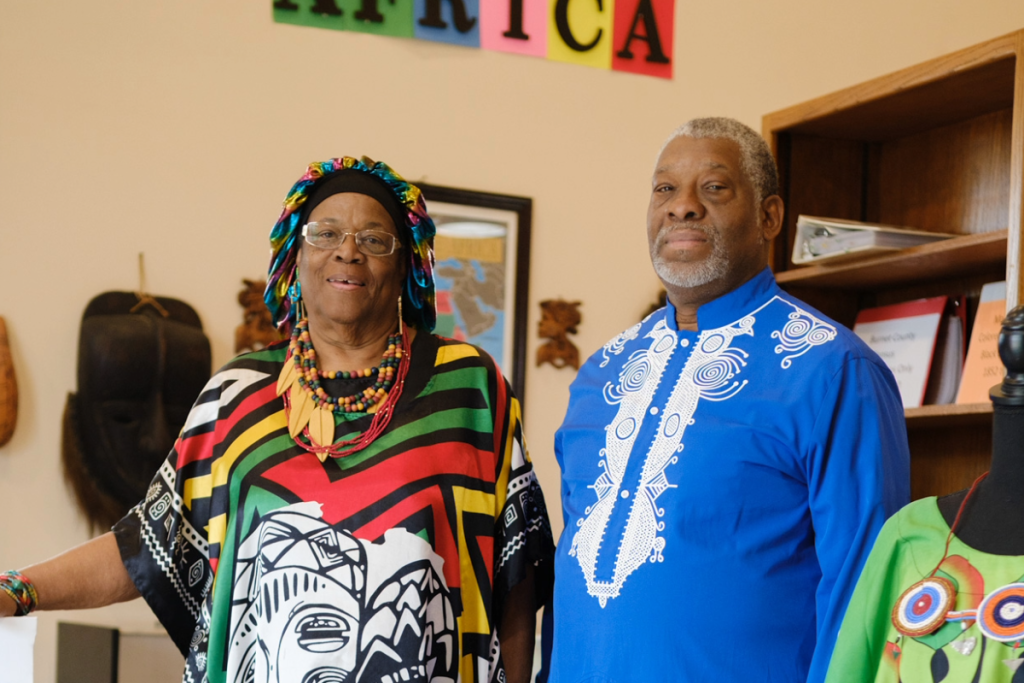
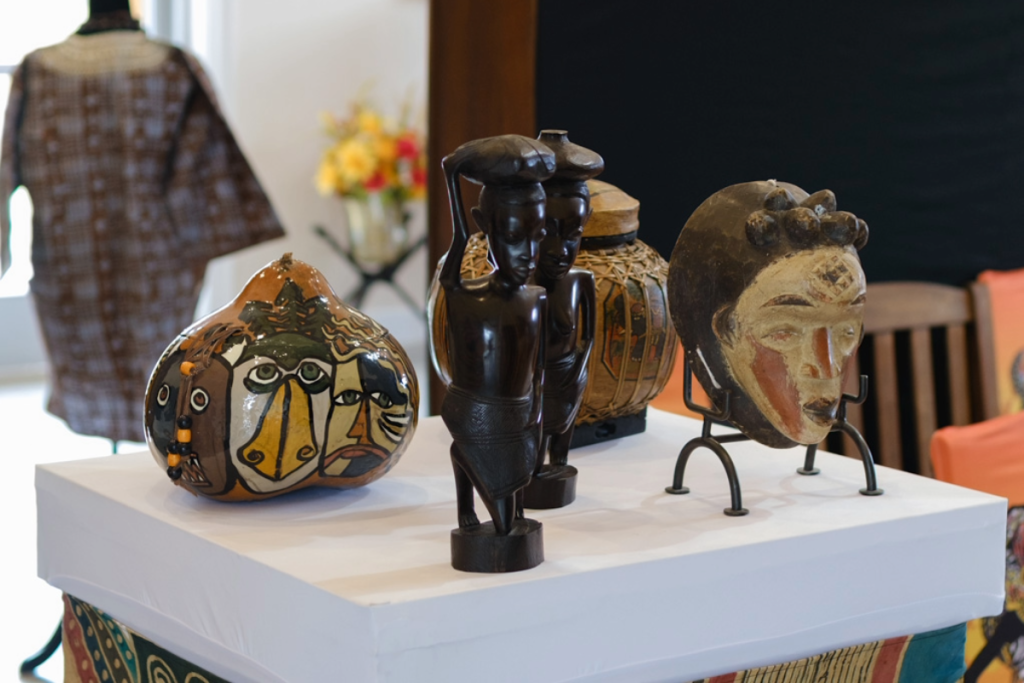
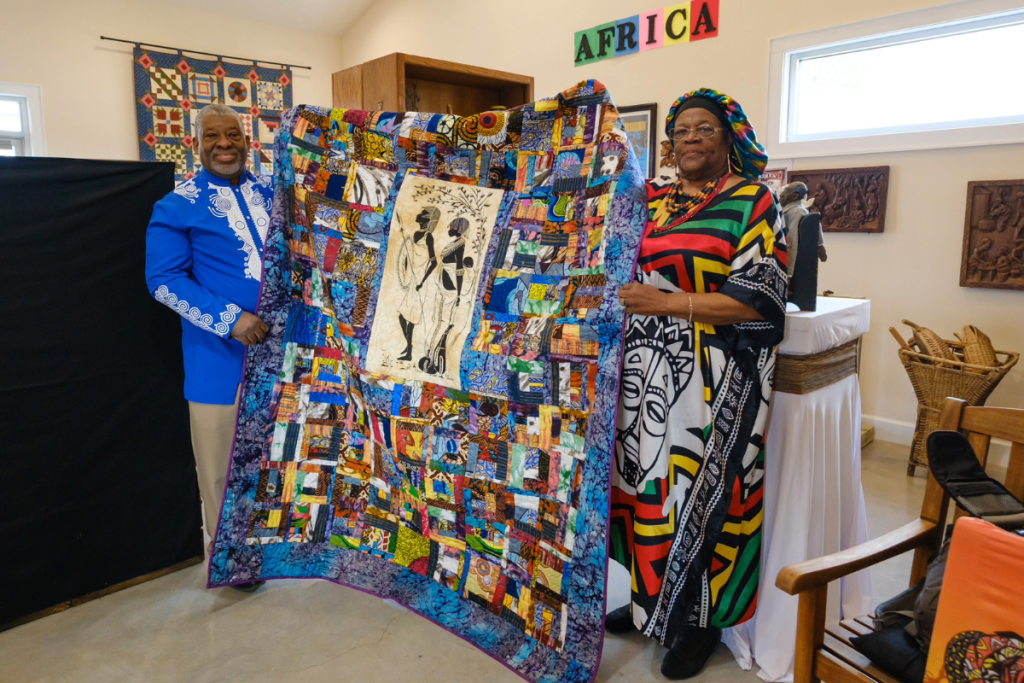
Jackson has been the driving force behind the museum, from idea to fruition. Her focus is on the creativity and progress of Africans and African Americans over the centuries up to the present day, including local success stories. The collection emphasizes the breadth of Black culture and its impact and significance on the local community.
“The museum shines a light on the experiences of Black culture, and, to me, we are chopping away at the prejudice that’s still active in the world today,” said the Rev. George Perry, church pastor. “We are a mixed congregation mixing with the community and working together, which is what I love most about this project.”
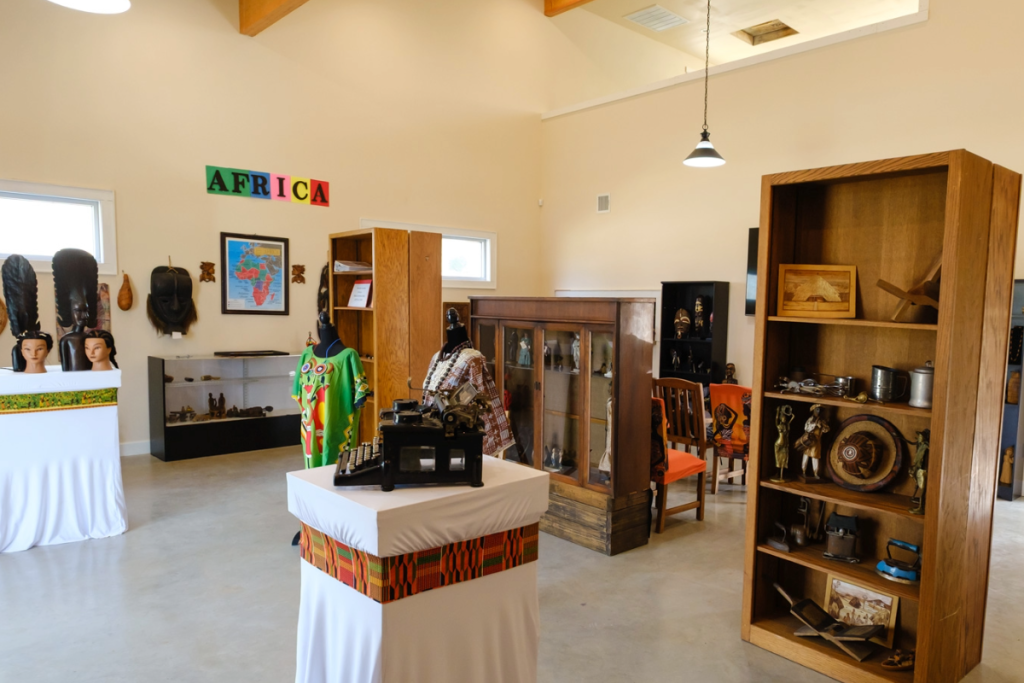
The purpose is to educate and build community around paving pathways to success for area youngsters. The museum is more than a collection of pretty objects, Perry said. It will serve as a hub for education, with speakers, presentations, and school field trips.
“The importance of history is so that our children can know what happened with our ancestors, what our parents did for us, and I’m not just thinking about any race, color, or nationality,” Perry said. “I don’t know how to stand and better myself if I don’t understand where I came from and who did what for me.”
Jackson sees the struggle behind the hard-fought successes of every person highlighted and every object spotlighted in the museum.
“Everyone can come over and see, yes, it (slavery) was an awful situation—we were brought in and treated badly,” she said. “The stigma has to go away. We are not entitled, one over another. Everybody should be accepting of who you are, where you are, and where you came from. That’s what we want to teach our young people.”
A good way to learn just that is to attend one or all of the Black History Month events on Feb. 21, 27, and 28. Find the schedule of events here.
Admission is free to the African-American Museum at St. Frederick Baptist Church, 301 Avenue N in Marble Falls. Hours may vary. Call 830-693-4499 or visit stfrederick.com for more information.