




Granite Shoals expands extraterritorial jurisdiction to include proposed development
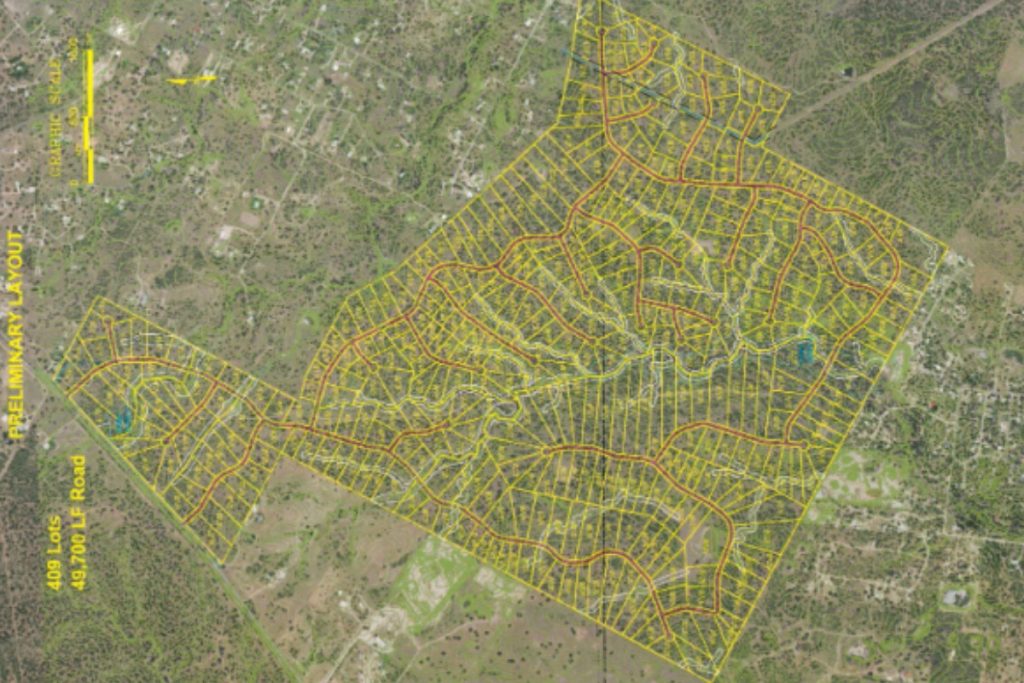
This graphic shows the proposed layout of a 912-acre development that would lie within the extraterritorial jurisdiction of Granite Shoals. City of Granite Shoals image
A proposed 912-acre residential development in Granite Shoals could bring 400 estate-style home lots to the area.
Granite Springs Ranch, planned for 3501 CR 120 off Fairland Road, is now entirely within Granite Shoals’ extraterritorial jurisdiction following a boundary expansion approved on Oct. 17. The change places the property under the city’s subdivision ordinance and allows the city to consider future annexation or a development agreement governing the project.
The property previously sat partly within the city’s ETJ and partly outside it.
“In the future, if the city wishes to annex this property or enter into a development agreement with this property, about how it’s developed, they would have to be in your ETJ in order to do either of those things,” City Attorney Joshua Katz said during the meeting.
An extraterritorial jurisdiction, or ETJ, is an unincorporated area outside city limits where a municipality has limited regulatory authority, including oversight of certain subdivision development. ETJ residents cannot vote in city elections, do not pay city property taxes, and generally do not receive direct city services, such as fire protection and trash collection. They remain subject to applicable county and school district taxes.
According to City Manager Sarah Novo, developer Lone Star Land Partners has requested an assessment of Granite Shoals’ ability to provide water to the proposed development.
“As the proposal advances, related items will be placed on City Council agendas for public input and council consideration,” Novo told DailyTrib. “We encourage residents to stay engaged and share their perspectives throughout the process.”
Connecting to the city’s water system would require the developer to meet Granite Shoals’ utility service requirements, which may include an agreement to extend water infrastructure. Under such an agreement, the developer generally would pay to extend the infrastructure and ensure it meets city standards.
Voluntary annexation is another potential path for bringing the property within city limits, where it would be subject to applicable city taxes and regulations and could become eligible for additional municipal services.