




Burnet Fire Department seeks federal grant for additional personnel
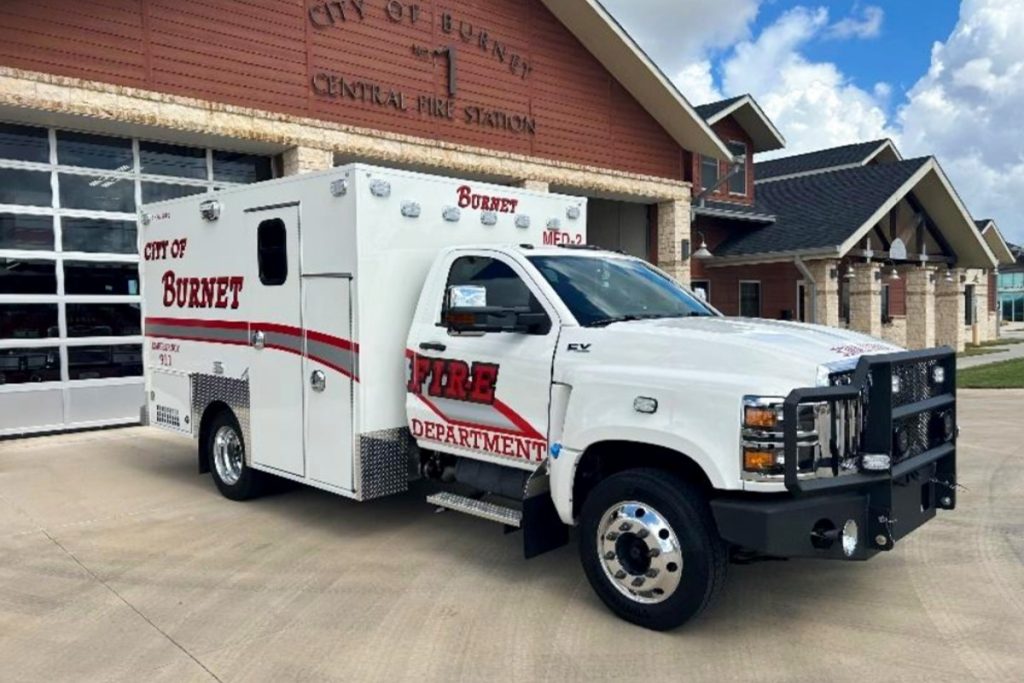
A Burnet Fire Department ambulance. Courtesy photo
The Burnet Fire Department is eyeing a federal grant that could help fund six new emergency medical staff to bolster its ranks.
The Burnet City Council greenlit the department’s grant application, to be filed with the Federal Emergency Management Agency, at a June 1 workshop meeting. If awarded, the Staffing for Adequate Fire and Emergency Response grant would allow the department to staff three emergency medical technicians and three paramedics to help ease its strained workload.
City Manager David Vaughn told DailyTrib that staffing costs could sit near $600,000 total annually, which the grant would cover 75 percent of for the first two years and 35 percent of for the third year. The city would be responsible for the full staffing costs following the third year.
According to Vaughn, fire department staffing, particularly on the medical side, has been an ongoing problem in recent years due to rising salaries and competition in the field.
“We gave out some pretty hefty raises during COVID,” Vaughn said. “So did everybody else. So the reality is, on the EMT side, we’re behind where we need to be. Used to be, if you had an EMT opening you had 30 people knocking down your door. Nowadays you could be an EMT making $95,000 a year working for an (emergency services district). The competition is much, much harder than there was in the past.”
Burnet Fire Chief Mark Ingram added that the city’s unique workload and geography amplifies those problems.
“In downtown Austin, you’re at a hospital in just a few minutes and it’s over… just get by 10 minutes and give your problem to somebody else,” he said. “That is not the way it works here. You could go out to the lake… and you’re gonna have to be a paramedic for the next hour and a half. It’s a long way.”
On top of servicing the city, the BFD has medical contracts with the city of Bertram and Burnet County (see page 36), amounting to an approximately 750-square-mile coverage zone that the department must stretch its emergency medical response services.