




New World screwworm detected in Texas
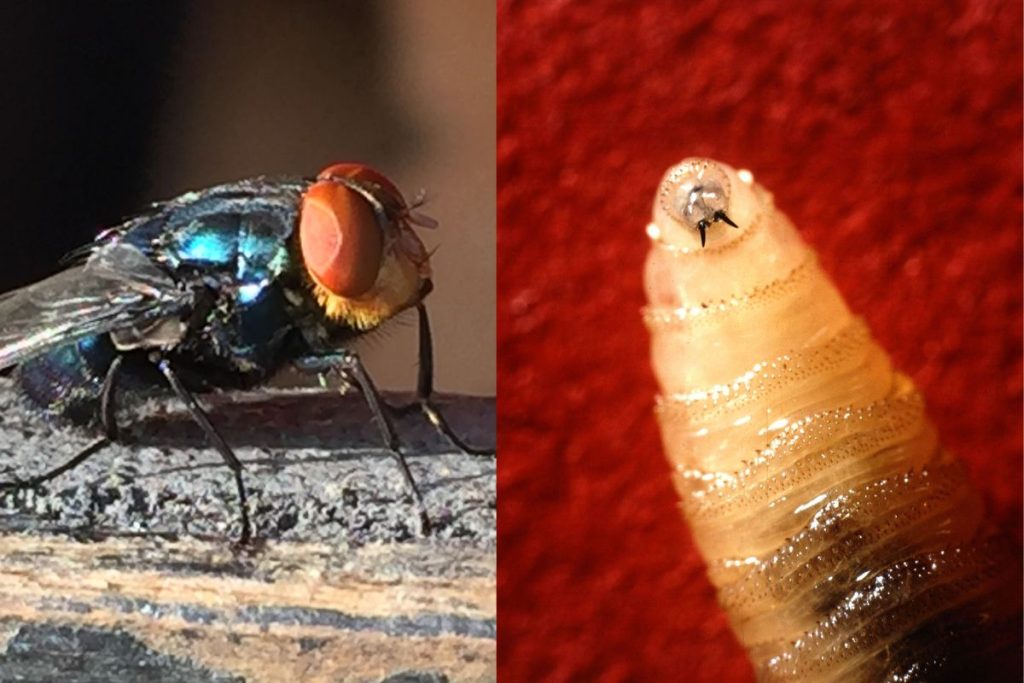
The New World screwworm fly and its larva have been detected in Texas, raising the alarm for livestock producers and wildlife populations across the state. United States Department of Agriculture photos
Texas has been preparing for the possible reappearance of the New World screwworm for more than two years, and the first confirmed infection in the state was confirmed on Wednesday, June 3. The flesh-eating parasite was detected in Zavala County, about 180 miles southwest of Burnet County.
The New World screwworm is the larva of the New World screwworm fly. These flies lay their eggs on open wounds or openings in the bodies of warm-blooded animals. Once the eggs hatch, the screwworms burrow or “screw” into the flesh of the host animal causing tissue damage, infection, stress, and in some cases death. This is of special concern to ranchers due to potential impacts on livestock, and to populations of wild mammals, like white-tailed deer herds.
According to the Texas Parks and Wildlife Department, this is the first detection of the New World screwworm in Texas since a northward progression of the parasite from Central America was observed in 2023. The Texas Animal Health Commission has established an infested zone in the infection detection area, and animal movement restrictions are in effect to prevent further spread of the pest.
“TAHC has been actively preparing for a resurgence of (New World screwworms) for over two years,” said Dr. Bud Dinges, TAHC state veterinarian and executive director, in a June 3 TPWD media release. “We are putting these preparations into action, and we encourage all animal owners and caretakers to continue to remain vigilant for the presence of larvae in animal wounds and immediately report any suspicions.”
The screwworm detection was in Zavala County, which is just south of Uvalde, about 180 miles southwest of Burnet County
Background
The fly was a problem in the United States for decades, first becoming a threat in the 1930s, although it had been in the American Southwest since at least 1842. The pest was effectively eradicated in the United States in the 1980s, but not without some devastating consequences. In 1976 alone, the Texas economy lost about $329.59 million due to livestock deaths from a New World screwworm outbreak. Accounting for inflation, that would have been $1.8 billion in 2024. About 1.48 million cattle were reportedly infected in that outbreak.
Since eradication in the 1980s, screwworms have had a minimal impact on U.S. ranchers, but even the threat of a potential outbreak is enough to raise the alarm. The U.S. Department of Agriculture estimates a screwworm outbreak could cost the Texas cattle industry $1.8 billion in annual losses and up to $10.6 billion in national economic damages.
Combating the worm
The New World screwworm was originally eradicated in the United States using the “sterile insect technique” which is done by releasing massive numbers of sterilized male flies into infected areas, leading to infertile eggs and breaking the screwworm’s breeding cycle.
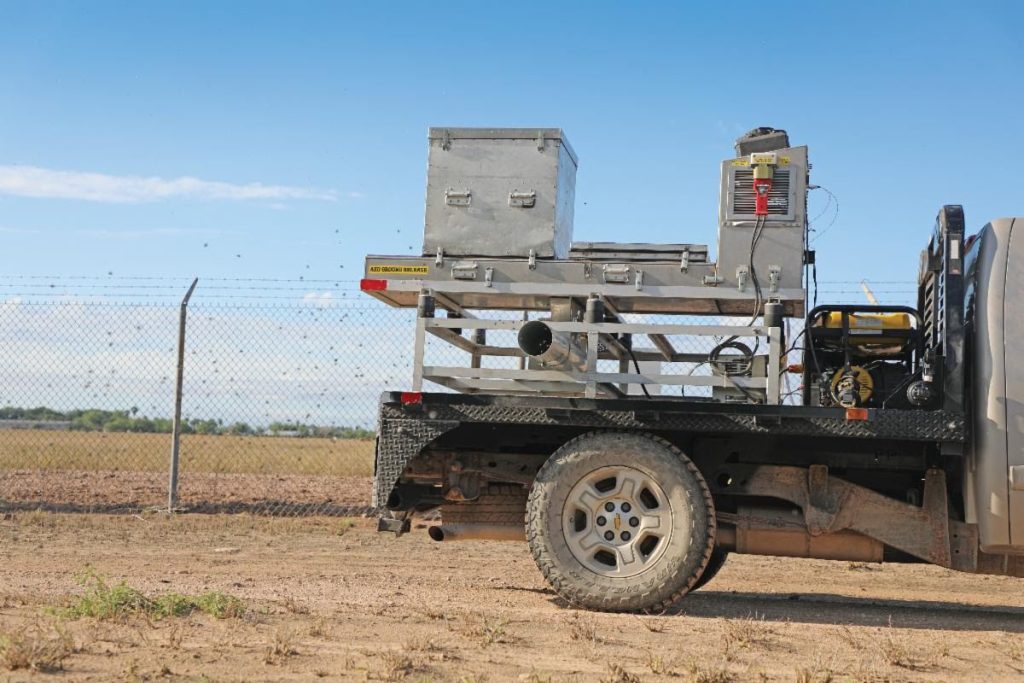
“Targeted releases of sterile (New World screwworm) flies are being expedited to eliminate any reproducing populations in the area associated with the detection,” reads the June 3 TPWD media release. “When combined with enhanced surveillance, movement restrictions, prompt treatment of wounds, and education and outreach efforts, the sterile insect technique is a proven and effective tool for controlling and eradicating this pest.”
The United States Department of Agriculture is already releasing large numbers of sterile flies along the U.S.-Mexico border and building a dedicated sterile fly production facility at Moore Air Base in Edinburg, Texas.
Resources
All southern ports of entry are currently closed to livestock trade according to the USDA.
See a gallery of images from the USDA showing what New World screwworm infections may look like at this link. The images have not been included in the article due to their graphic nature.
Signs of New World screwworm infection include:
- Feeling larva move or seeing maggots within a skin wound or sore, or in the ears, nose, eyes, or mouth
- Painful skin wounds or sores that worsen within a few days
- A foul-smelling odor from the site of the infestation
- Bleeding from open sores
Prevention methods:
- Make sure pets traveling internationally are inspected for screwworm
- Handle livestock carefully and inspect pens and equipment for sharp objects that can cause wounds
- Treat the umbilical cords of newborn animals and all wounds immediately with an approved insecticide
- Protect pets and livestock from other wound-causing parasites such as ticks
If you are concerned about a possible New World screwworm infection, contact your local veterinarian or the Texas Animal Health Commission at 1-800-550-8242.