
‘Wouldn’t you like to harness the power of the sun?’ Solar Car Challenge makes a pit stop in the Highland Lakes
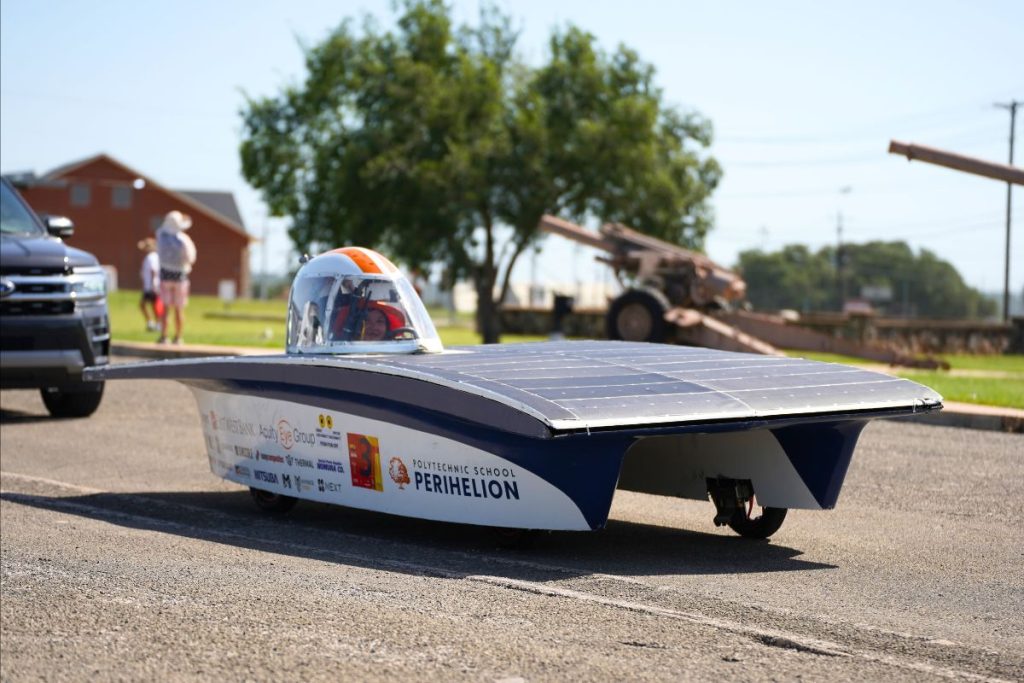
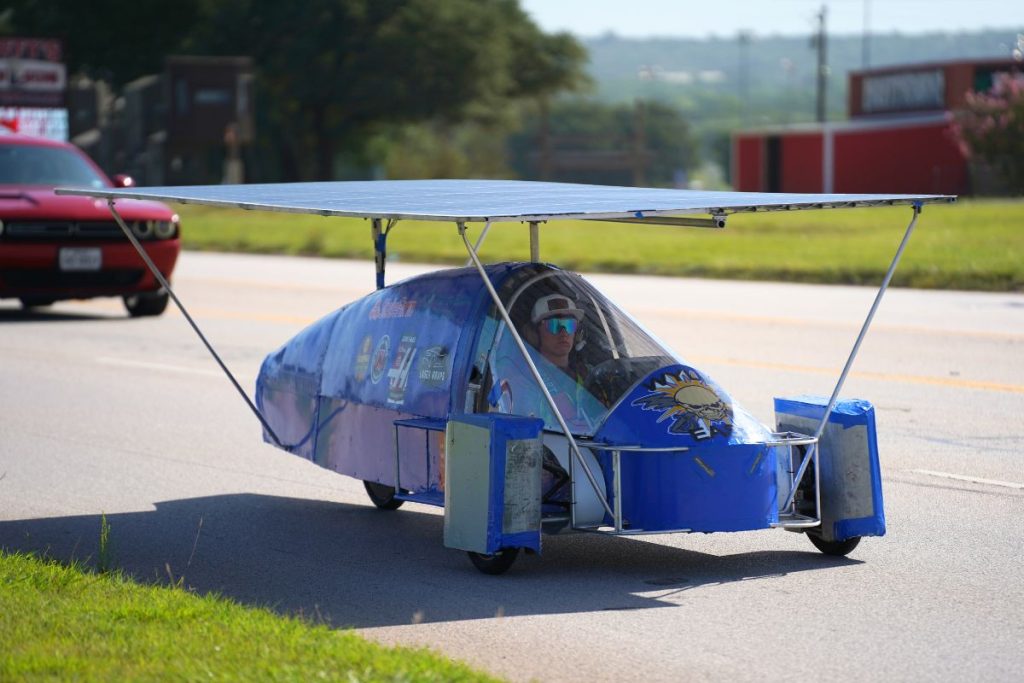
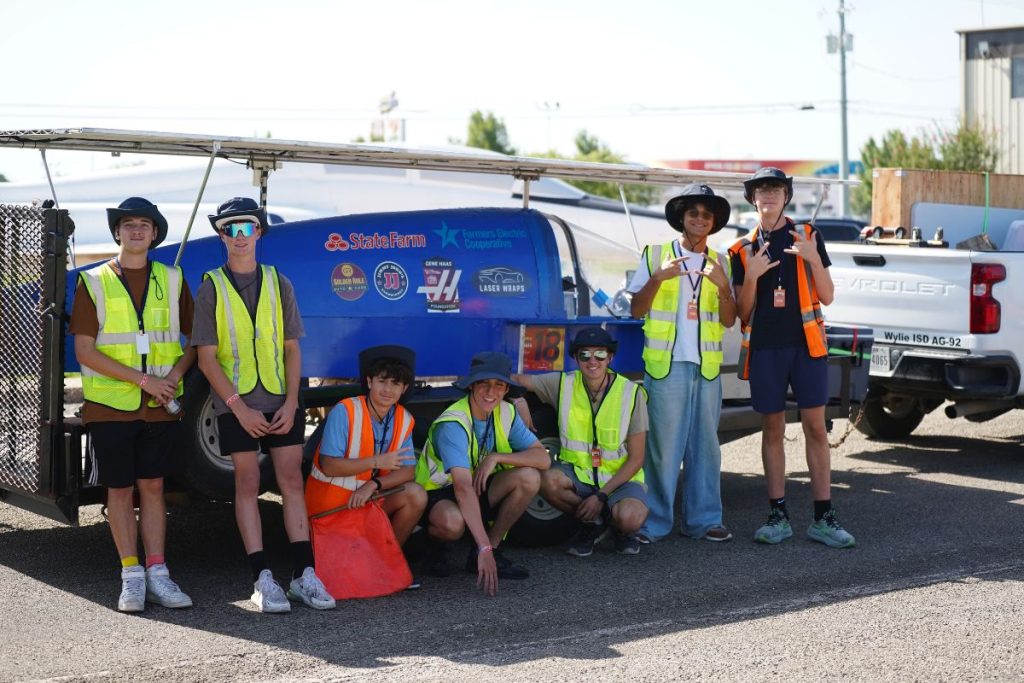
Perihelion, Poly Solar Car Team’s vehicle, making its stop at the Commemorative Air Force Museum in Burnet on July 21. Staff photos by Caden Senn
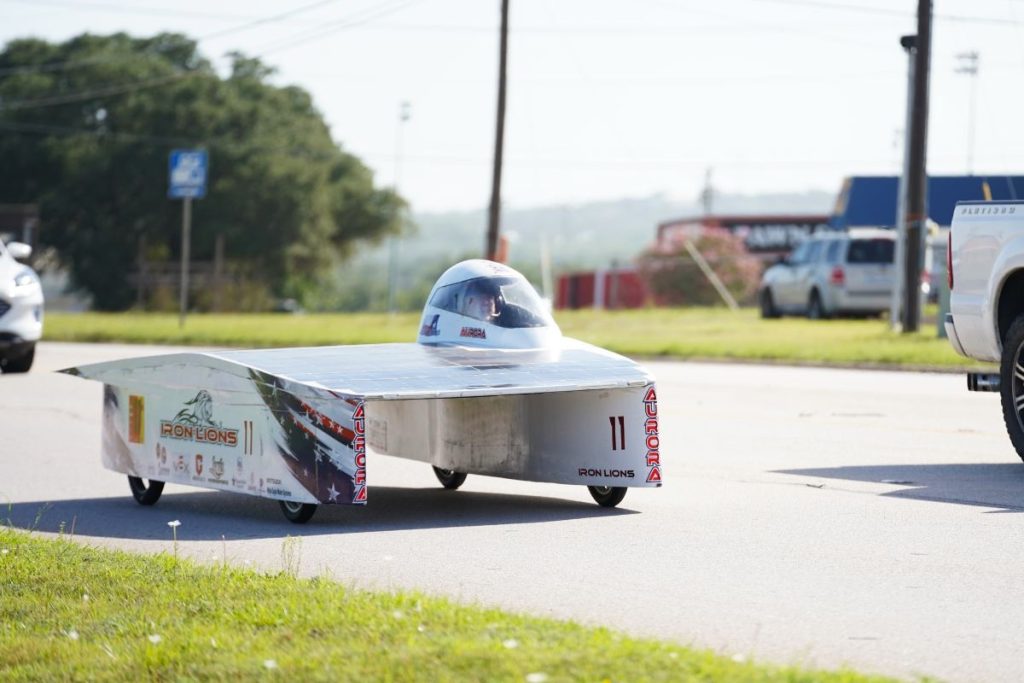
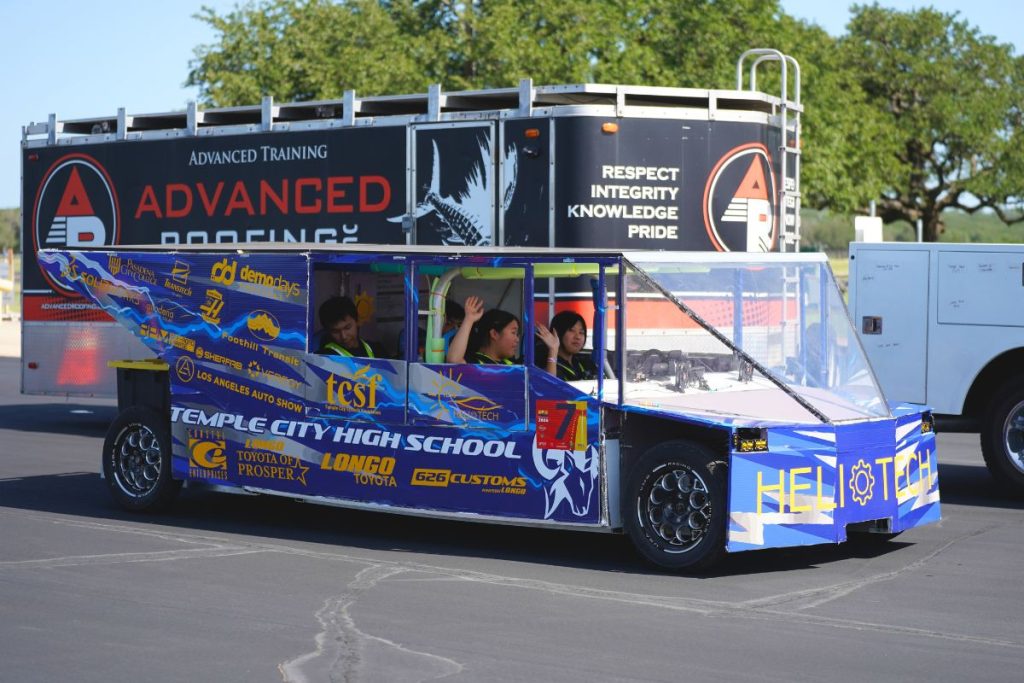
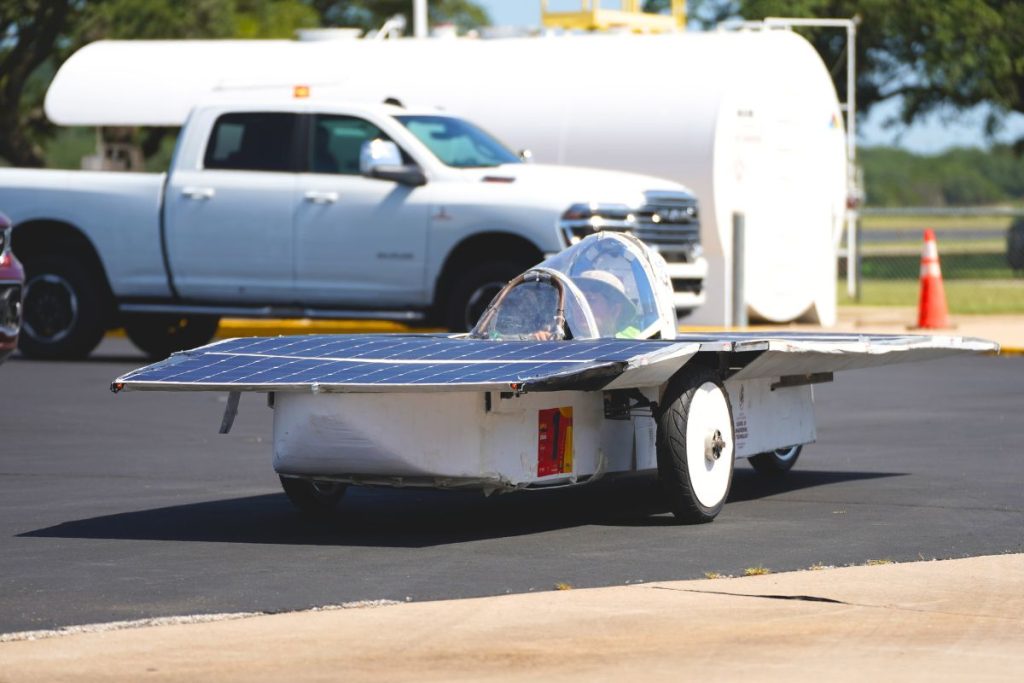
Dozens of stellar students from around the country kicked into gear and harnessed the power of the blazing sun this week to race across the state in the 30th annual Solar Car Challenge, making a pit stop in the Highland Lakes on Tuesday, July 21.
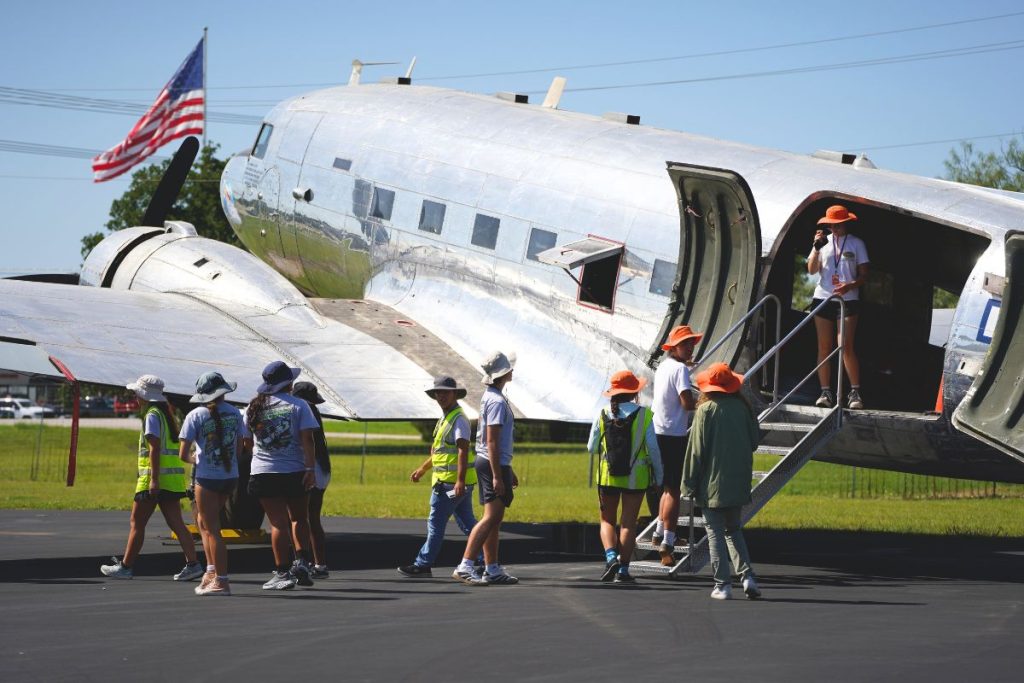
The young racers stopped for a brief respite at the Highland Lakes Squadron Commemorative Air Force Museum in Burnet during the third leg of their 631.7-mile race across Texas, getting a chance to recharge their cars, enjoy some ice-cold treats, and tour the squadron’s fleet of warbirds from days past.
The Solar Car Challenge–taking place over five days and stretching from Fort Worth to Fort Stockton–tasks high school students from around the nation with designing, fabricating, building, and operating their own solar-powered vehicles, pitting them against each other in a race to see whose vehicle can go the farthest distance.
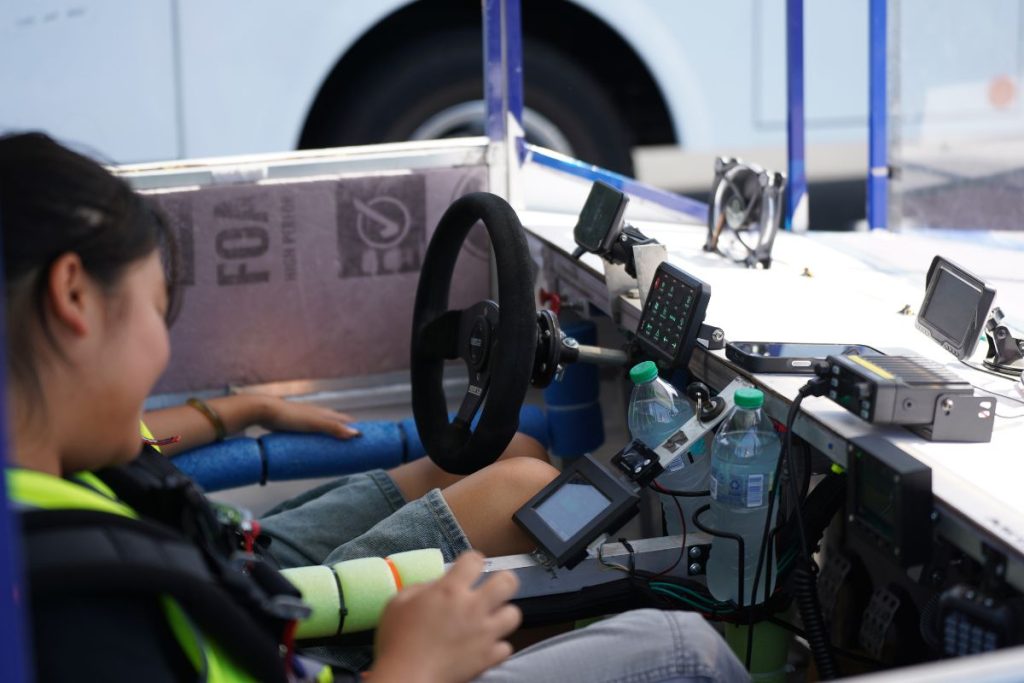
“Wouldn’t you like to build a car? Wouldn’t you like to harness the power of the sun? And wouldn’t you like to drive in a NASCAR facility?”
That’s the hook that Solar Car Challenge founder Dr. Lehman Marks leads with each time he presents the race to a new cohort of students. Dr. Marks told DailyTrib that he created the challenge back in 1993, before science, technology, engineering, and mathematics programs (STEM) held the weight they do today.
“Back then, there was no such thing as STEM,” he said. “That was a problem. No taking learning and co-joining it with hands-on projects. We did that.”
Since the race’s inception, the series has sped through countless states, including California, Colorado, Minnesota, New York, Florida, and Mississippi. This year, students converged on the Texas Motor Speedway in Fort Worth to begin the grind of blitzing through the great state of Texas.
For many students involved, the challenge provides more than a high-octane thrill, giving them the chance to refine real-world technical skills that can fuel their future careers.
“You get a lot of work done, and you get to use your hands in all of these different ways,” challenger Dylan Nord, who piloted Wylie East High School’s car on Tuesday, told DailyTrib. “We’ve done a lot of welding on the frame since we completely started from scratch. I got to do a lot of welding and I’ve gotten much better at working on aluminum.”
Nord told DailyTrib that he’s working to become a welder, and that the challenge has been key to improving his skills.
The challenge also teaches students how to solve real-world problems while on a strict time crunch.
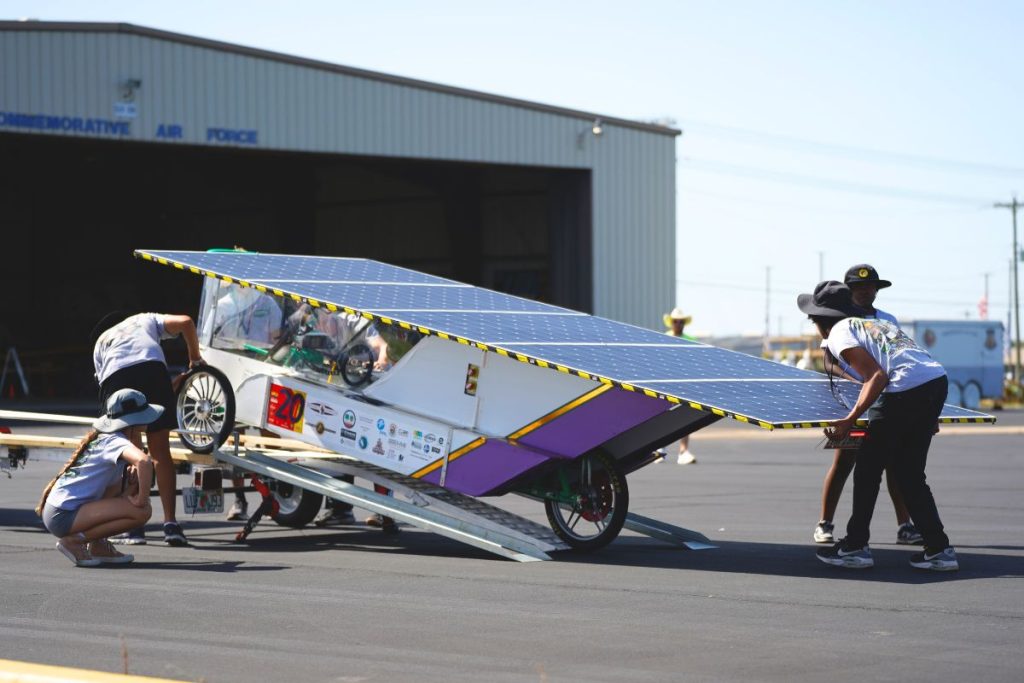
As racers made their way to the airfield in Burnet, teams had a short period of time to make on-the-go repairs to their chassis, soak up some sun power, and get their vehicles trailed to be transported to the next leg of the race.
While parents and volunteers help the students by driving pilot cars in front of and behind the solar cars, competitors are expected to do every ounce of work on their own, even if that means pushing hundreds of pounds of metal, plastic, and solar panels into a tight trailer.
After making their short stop in Burnet, the racers headed to Johnson City to prepare for the next portion of the race, looking for a solid close on the day before two final days of racing on Wednesday, July 22, and Thursday, July 23.
What is the Solar Car Challenge?
The Solar Car Challenge was created in 1993 by Dr. Lehman Marks to give students a way to pursue unique opportunities in science, engineering, and energy.
Through years of ideating, fabricating, and trial and error, students build solar cars from scratch to be “scrutineered” by judges. The scrutineering process, which takes place at the Texas Motor Speedway in Fort Worth in July, serves as a checkpoint for teams to see if their cars are ready to race or not.
Once they get the green light, teams prep to begin a long-distance race to see whose car can go the furthest.
This year’s race stretches 631.7 miles from Fort Worth to Fort Stockton over five days, and features 24 teams from seven states, including Texas, California, Oregon, Michigan, Florida, New York, and Washington.
Teams will face mechanical breakdowns, uncertain weather conditions, and rough terrain along the way to accumulating the most points possible. At the end of the checkered flag, the team that drove the most miles will be declared the winner.
Along with potential races through Bertram and Burnet, the solar cars will be trailered and transported along U.S. 281 in Marble Falls and Round Mountain, landing in Johnson City to begin the next stretch of the race.