




LCRA considering another new reservoir to alleviate pressure on Highland Lakes
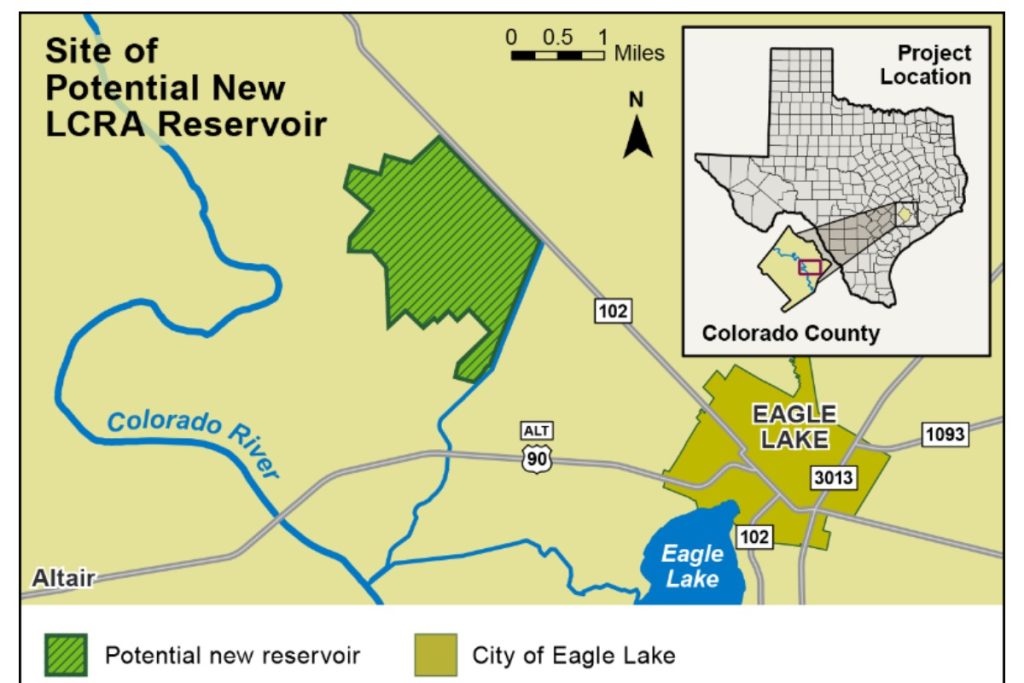
This graphic shows the site of a potential new Lower Colorado River Authority reservoir. Courtesy image
The Lower Colorado River Authority is considering the construction of a new reservoir in Colorado County to help increase overall storage capacity, which could ease the burden on the Highland Lakes for providing water to communities farther downstream.
During a recent meeting, the LCRA Board of Directors approved a feasibility study on a 2,000-acre property in Colorado County, about 160 miles southeast of Burnet County, near the city of Eagle Lake. If the project moves forward, it would hold between 48,000 and 80,000 acre-feet of water. This would make it potentially double the size of the Arbuckle Reservoir, at 40,000 acre-feet, which was just completed in October 2025.
“Now that Arbuckle Reservoir in Wharton County is up and running, we’re looking at bringing another major water supply project online,” LCRA board chair Stephen F. Cooper said in a Feb. 18 media release. “That next project may well be another off-channel reservoir about an hour up the road in Colorado County.”
As it stands, lakes Buchanan and Travis, serve as the primary water storage for millions of Texas residents, stretching from Llano and Burnet counties to the Austin metro-area and many cities along the Colorado River basin leading to the Texas coast.
The potential new reservoir would add to existing supplies and help meet increasing water supply needs throughout the lower Colorado River basin. The lower basin typically receives significantly more rainfall annually than the area around the Highland Lakes northwest of Austin.
“It’s too early to know specifics, because we first need to do our due diligence,” LCRA General Manager Phil Wilson said. “We need to know how the site could best be used for off-channel storage and the technical, environmental and permitting constraints. Once we have that information, we’ll estimate the cost, look at funding options and develop a timetable.”